
Shutup Pig!
I won’t tolerate dissent!
Download a Free Copy for the Fridge:
 Liz Truss in Danger on Threadneedle Street Analysis | Constitutional & Financial Affairs Liz Truss claims she was sabotaged. The Bank says markets acted. The evidence lies somewhere in between — and the implications for British democracy are profound. On 23 September 2022, Chancellor Kwasi Kwarteng rose in the House of Commons to deliver what the Truss government called a “growth plan” — sweeping unfunded tax cuts intended to shock the British economy into expansion. Within days, the pound had crashed to a record low against the dollar, gilt yields had spiked to crisis levels, pension funds were facing collapse, and the Bank of England had been forced into emergency intervention. Forty-five days after taking office, Liz Truss resigned. It was the shortest premiership in British history. CONTINUE READING: The Unelected Hand: Could the Bank of England Topple a Prime Minister?  Jawboning This how our politicians do it since we lost our empire.
Download a Free Copy for the Fridge:  Govender Dog Hump, British Columbia’s Human Rights Commissioner Download a Free Copy for the Fridge:  Robert Habeck’s Goose Download a Free Copy for the Fridge: There is an old phrase, beloved by straight-talkers and kitchen-tested pragmatists the world over: if you can’t stand the heat, get out of the kitchen. It is a phrase that appears to have been lost somewhere in translation on its way to Berlin. Because in Germany today, if you call a politician a dummkopf — or a goose, or an idiot, or even a Pinocchio — you may find yourself waking up to a dawn police raid, your phone and tablet confiscated, and a fine that would make your eyes water. This is not satire. Or rather, it is — but the tragedy is that the satire is real. The Law That Ate Common Sense Germany has long had laws against Beleidigung — insult — on the books. Section 185 of the German Criminal Code makes public insult punishable by up to two years in prison, though fines are the more common outcome. Then there is Section 188, a more targeted provision covering “abuse, slander or defamation against persons in political life.” Together, these laws form a legal cudgel that Germany’s political class has discovered — with something approaching glee — can be wielded against the very citizens they were elected to serve. Police deal with over 200,000 such complaints every single year. Two hundred thousand. To put that in perspective, that is roughly the population of a mid-sized German city, all presumably engaged in the ancient and essential democratic tradition of telling their leaders exactly what they think of them. The Numbers Are Staggering — and Staggeringly Absurd Let us talk about Robert Habeck, former Vice-Chancellor and Green Party leader. A man so sensitive to the opinions of the public he was elected to serve that he personally filed 805 criminal complaints against ordinary citizens for insulting him online. Eight hundred and five. Not eight hundred and five death threats. Not eight hundred and five genuine incitements to violence. Eight hundred and five cases of people calling him things like “dumb goose,” “complete idiot,” and “green rat.” Former Foreign Minister Annalena Baerbock was not far behind, filing 513 complaints of her own. Other politicians from across the spectrum piled in too — because apparently, once you discover you can sic the police on a pensioner for leaving a rude comment on Facebook, it becomes something of a hobby. The fines that followed were anything but trivial. One man was fined €7,800 for calling Habeck “a complete idiot.” Another was handed a €6,000 fine for calling him “dirty” and describing Baerbock as “stupid.” A nurse — a nurse, a person who presumably deals with genuine suffering on a daily basis — was fined €1,000 for calling Chancellor Friedrich Merz an “asshole.” A Stuttgart resident who described Merz as a “dirty drunk” had his home searched. A wheelchair-bound woman who called him a “Nazi” received the same treatment. And then there is the case that perhaps best captures the full surrealist comedy of the situation. In February 2026, police in Heilbronn opened a criminal investigation into a retired man — a pensioner — for commenting on a police Facebook post about Chancellor Merz’s upcoming visit. His devastating, society-threatening contribution? The word “Pinocchio” and a long-nosed emoji. The police, it should be noted, had deployed a social media task force to scour every single comment on the post for “possible indictable insults.” One imagines the meeting where that assignment was handed out. A 64-Year-Old, His Wife, and His Daughter With Down Syndrome Perhaps the most quietly outrageous case involved a 64-year-old German man who posted a photo online calling Habeck a “professional imbecile.” Vice-Chancellor Habeck — a man with the full apparatus of the German state behind him — reported the citizen to police. Officers arrived at dawn, rousting not just the man but his wife and their daughter, who has Down Syndrome. They seized his phone and his tablet. Prosecutors argued, apparently with straight faces, that the man had shared the photo to “defame Robert Habeck in general and to make his work as a member of the federal government more difficult.” Heaven forbid. A citizen making a politician’s work more difficult. By having an opinion. On the internet. Hogarth Must Be Spinning in His Grave Here is a thought worth sitting with: the English used to pay William Hogarth for the privilege of seeing politicians and public figures skewered in print. His satirical engravings — brutal, gleeful, merciless takedowns of the powerful and the pompous — were purchased eagerly by the public and hung proudly on walls. Mocking those in power was not just tolerated; it was considered a sign of a healthy, living democracy. The English understood instinctively that poking fun at the political class was not a crime to be punished — it was a sport to be celebrated. It was the common man’s great equalizer. The tradition is ancient and honorable. From Aristophanes lampooning Athenian politicians in 400 BC, to the vicious caricatures of the French Revolution, to the great British tradition of political satire that gave us Private Eye and Spitting Image, the right to laugh at your rulers has always been understood as the canary in the coal mine of freedom. When that right is extinguished, something essential goes with it. Germany’s satirical tradition is not nothing — the country has its own rich history of political cabaret and sharp-tongued commentary. Which makes the current moment all the more bewildering. A journalist named David Bendels, editor of the Deutschland-Kurier, posted a meme showing then-Interior Minister Nancy Faeser holding a sign that read “I hate freedom of opinion” — a satirical dig at her own push for greater censorship online. The irony was almost too perfect. The authorities were not amused. Bendels received a seven-month suspended prison sentence and a €1,500 fine for — and hold onto your lederhosen — “abuse, slander or defamation against persons in political life.” A satirist punished for satire about censorship. Kafka himself could not have written it better. The Architecture of Enforcement It does not stop at the courts. Germany has built an entire infrastructure for policing hurt feelings. The 2017 Network Enforcement Act — NetzDG — compels social media platforms with more than two million users to delete “obviously illegal” content within 24 hours of receiving a complaint, or face fines of up to €50 million. The practical result is predictable: platforms delete far more than the law strictly requires, because the risk of getting it wrong is existential. Beyond that, Germany has established a network of state-funded — and in some cases outright state-run — reporting centers tasked with flagging “hate and agitation” online. Two of these organizations have been designated “trusted flaggers” under the EU’s Digital Services Act, giving them a fast lane to demand content removal from social media companies. Critics, including lawyers and politicians across the political spectrum, have warned that these centers routinely mistake opinion for hate speech. The pressure on platforms to press delete, they note, is enormous. Even the European Constitutional Court has had to weigh in, developing criteria for when a politician’s feelings actually constitute a legal matter — because apparently, this needed clarification. The Political Class Discovers a Useful Weapon What makes this particularly rich — and particularly troubling — is that the law is being used by politicians of every stripe. The AfD, Germany’s right-populist party, officially supports abolishing Section 188 as an affront to free speech. Their leader, Alice Weidel, has nonetheless filed hundreds of complaints under it herself. Because when you hand powerful people a hammer, they tend to find a great many nails. The CDU campaigned on reining in the Greens’ abuse of the insult laws during the last election. They have since been using the same laws with equal enthusiasm. A nurse here, a pensioner there, a wheelchair-bound woman somewhere else. The law is bipartisan in its thin-skinned application, if nothing else. If You Can’t Stand the Heat… Let us be plain about what is happening here. Politicians — people who have chosen, of their own free will, to enter the most public of professions, to seek power over their fellow citizens, to stand on stages and make promises and craft policy that affects millions of lives — are using the criminal justice system to punish ordinary people for calling them rude names on Facebook. Not threats. Not incitement. Not organized harassment campaigns. Rude names. Pinocchio. Dumb goose. Complete idiot. Professional imbecile. The ancient contract between the powerful and the public has always included, as one of its essential clauses, the right of the governed to mock the governors. It is not a courtesy. It is not a privilege to be granted and revoked at the whim of the offended minister. It is the very heartbeat of democratic culture — the recognition that power must always be answerable to irreverence, that no politician is so grand that a cartoon cannot puncture them, that the court jester exists precisely because the king must never be above laughter. When Robert Habeck files his 805th criminal complaint because someone on the internet thinks he is a goose, he is not protecting his dignity. He is demonstrating, rather conclusively, that he has none to protect. If you cannot stand being called a dumb goose by a retired electrician in Bavaria, perhaps the rough-and-tumble of democratic politics is not your natural habitat. William Hogarth understood this. The English public of the 18th century understood this. The Athenians understood this 2,400 years ago. The question is why, in the year 2026, Germany’s political class does not. Or perhaps the more uncomfortable question is: they understand it perfectly well. They simply prefer it the other way. All fines and case details cited in this article are drawn from reported court proceedings and news accounts. The pensioner with the Pinocchio emoji could not be reached for comment, as his phone was confiscated.
So take another knee you stupid Flucks!
Click on the blue link below to download a free copy of the EU and Finnish banned Christian Church Pamphlet entitled MALE AND FEMALE HE CREATED THEM, Homosexual relationships challenge the Christian concept of humanity by Päivi Räsänen |
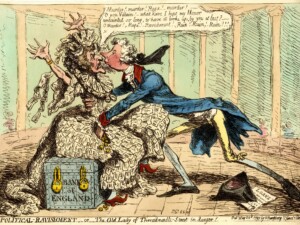
The Unelected Hand: Could the Bank of England Topple a Prime Minister?
Liz Truss in Danger on Threadneedle Street Analysis | Constitutional & Financial Affairs Liz Truss claims she was sabotaged. The Bank says markets acted. The evidence lies somewhere in between — and the implications for British democracy are profound. On 23 September 2022, Chancellor Kwasi Kwarteng rose [...] Read more → 
Male and Female – He Created Them by Päivi Räsänen
Click on the blue link below to download a free copy of the EU and Finnish banned Christian Church Pamphlet entitled MALE AND FEMALE HE CREATED THEM, Homosexual relationships challenge the Christian concept of humanity by Päivi Räsänen Male and Female; He created them [...] Read more →
British Columbia’s Human Rights Commissioner Transitions the Nation With a $750K Prick
Govender Dog Hump, British Columbia’s Human Rights Commissioner Download a Free Copy for the Fridge: Govender Dog Hump Read more →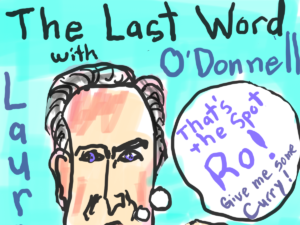
MS Laurence O’Donnell Receives On Air Currying from Ro Khanna
That’s the Spot Ro, Give that Currying Ro, You’ve got the best curry of them all! Download a Free Copy for the Fridge: That's the Spot Ro Read more → 
The Met Police in London Have Lost Control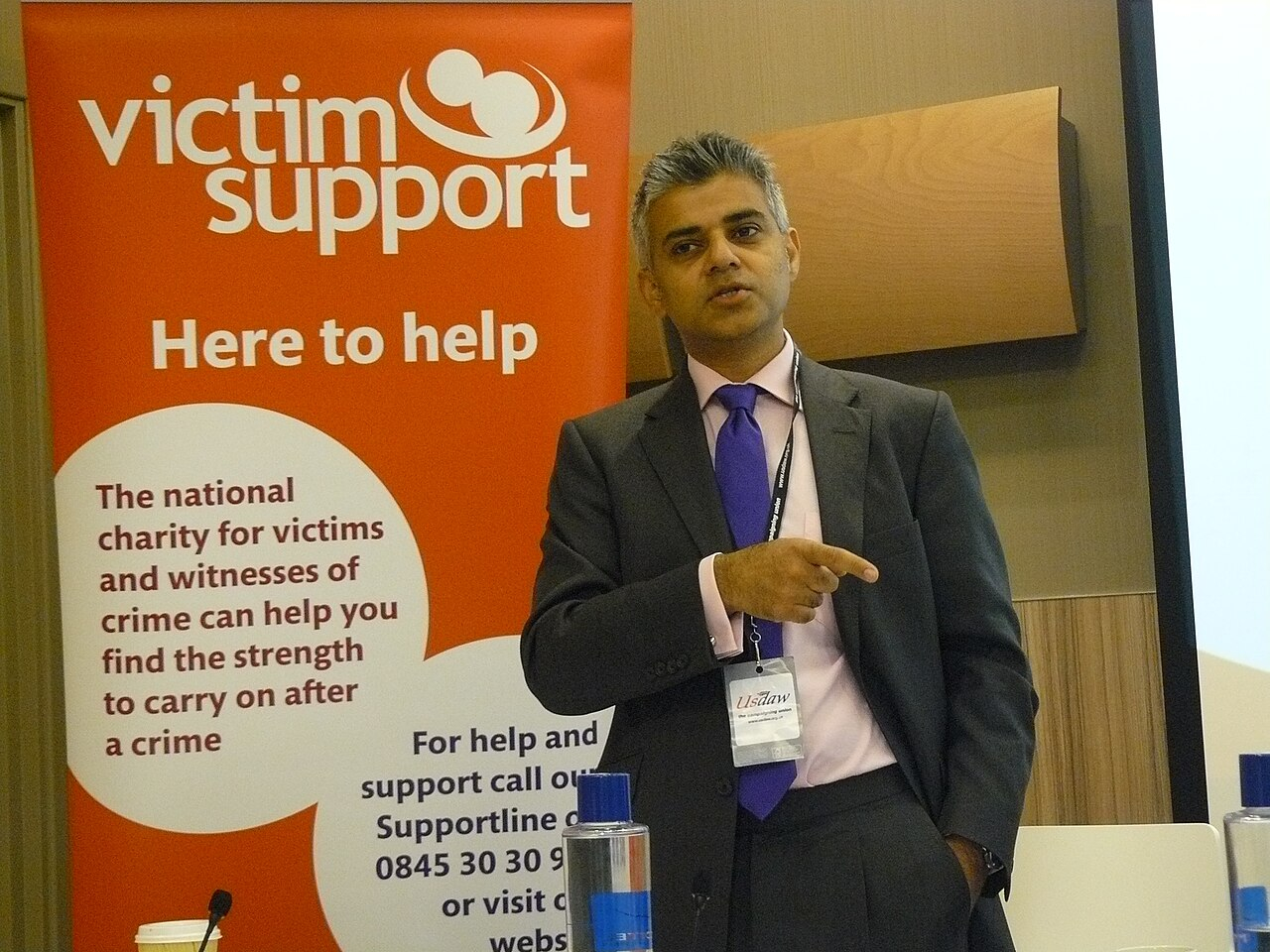
Sadiq Khan’s Little Baboons Running Wild in the Streets of Clapham South London Raiding High Street Stores
London has a problem with it’s little baboons. Black Lives Matter, right Starmer? Right Sadiq Khan? Bands of roving baboons, little gangstas (my “niggas”) as the rapper sings, are running wild in the streets of London and terrorizing the neighborhoods of Clapham. The Met Police are impotent and quite frankly useless as [...] Read more → 
Starmer Gets His Gun
Tall Talking Keir Sir Keir goes to war. Download a Free Copy for the Fridge: Starmer Gets His Gun Read more →
Have You Been Served? Dying on the Gurney While Britain Queues
“1945: A young Princess Elizabeth beside a military ambulance — the same year Britain began building the NHS on a promise of care for all. Eighty years later, the ambulances are still there. They’re just stuck in a different kind of queue.”
“Are You Being Served?” was a comedy. [...] Read more → 
Christians Under Attack by Gay Communist Apparatchik Censors of Finland’s High Court
Finland’s faggots have got their government by the balls. Even the High Court is high on the smoke that has been blown up its arse. A once proud Christian nation is now being fondled by the devil himself, kiddie fiddlers, and sycophantic scrotum scratchers at the High Court [...] Read more → 
Has a New Industry Just Been Born? AI Datacenter Insurance, Anyone?
Lloyd’s Subscription Room – 1809 On March 1, 2026, three Iranian drones answered a question the insurance industry had never seriously been asked before. The answer is going to cost someone a very great deal of money — and nobody is quite sure yet who that someone is. Read more → 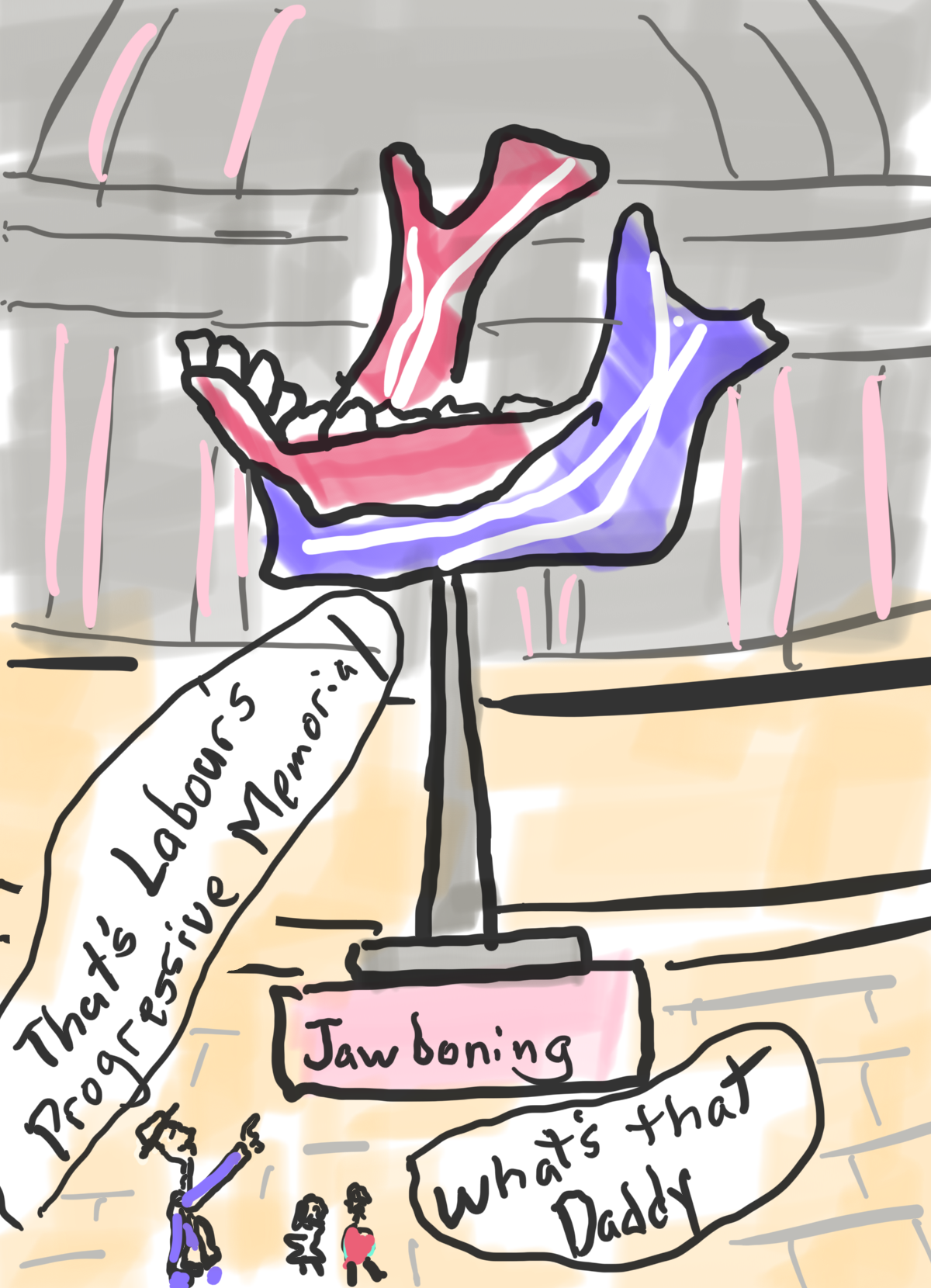
London Has Lost its Influence on the World Stage
Jawboning This how our politicians do it since we lost our empire.
Download a Free Copy for the Fridge: Jawboning Read more →
The Middle East’s Data Center Gold Rush: Risk and Opportunity in the World’s Most Contested Digital Frontier
Over a trillion dollars in AI infrastructure is being planted in one of the world’s most volatile regions. The rewards are real. So are the missiles. Here is the full picture nobody is giving you. The Gold Rush in Numbers To understand what is happening in the [...] Read more → 
Kathleen “Goebbels” Parker Promoted to Chief Propaganda Officer at the Washington Post
Frankly Speaking about Insulting Politicians in Germany
Shutup Pig! I won’t tolerate dissent! Download a Free Copy for the Fridge: Frankly Speaking
Read more → 
Can a Politician Really Be a Dummkopf? Germany’s War on Hurt Feelings.
Robert Habeck’s Goose Download a Free Copy for the Fridge: Robert Habeck's Goose There is an old phrase, beloved by straight-talkers and kitchen-tested pragmatists the world over: if you can’t stand the heat, get out of the kitchen. It is a phrase that appears to have been [...] Read more → 
British Prime Minister Arrives in the Gulf to Discuss Cease Fire
Cease Fire Sir, it’s the British Prime Minster! Download a Free Copy for the Fridge: Cease Fire Read more →
The National Horror Show: Britain’s NHS Is One Sick Puppy — And It’s Costing a Fortune
“Thirty million sick days. Three billion pounds on agency cover. A workforce more anxious, more burnt out, and more absent than at any point in recorded history. Is this really what Britain is proud of?” Let that sink in for a moment. The National Health Service — [...] Read more → 
I Witnessed the Birth of AI; it is Time to Correct the Wall Street Narrative
A First-Person Account from a Mathematics Laboratory at the University of Tennessee, Knoxville — 1991 — and the Government Machinery That Made It Possible by a graduate student who was there | Research & Historical Context: UT Knoxville / Oak Ridge / DARPA / DOE I. The Lab on the [...] Read more → 
The Mental Health Mythological Goose Has Been Cooked: Britain’s Most Convenient Diagnosis and the Billions Nobody Dares Count
“Hundreds of family doctors told the BBC they have never — not once — refused a mental health-related fit note. Some admitted patients became aggressive if questioned. Others said it simply wasn’t their job to police the system. The goose, it turns out, lays on demand.” Let us be absolutely [...] Read more → 
Keir Starmer Heads to the Middle East with his Coaltion of the Willy
Sir Keir Starmer’s Coalition of the Willy Wee’re not really in this war Beth…ahhh Download a Free Copy for the Fridge: Sir Keir's Coalition of the Willy Read more →
MS Jen Saki Glows Green With Melania Envy
Melania Envy Who is the fairest? Get out of my mirror Melania! Download a Free Copy for the Fridge: Trumped by Melania
Read more → |
|
All Rights Reserved © 1889-2026 Helsinki Sanomat Site Policies | Top of Pg. | Helsinki Sanomat |
|


