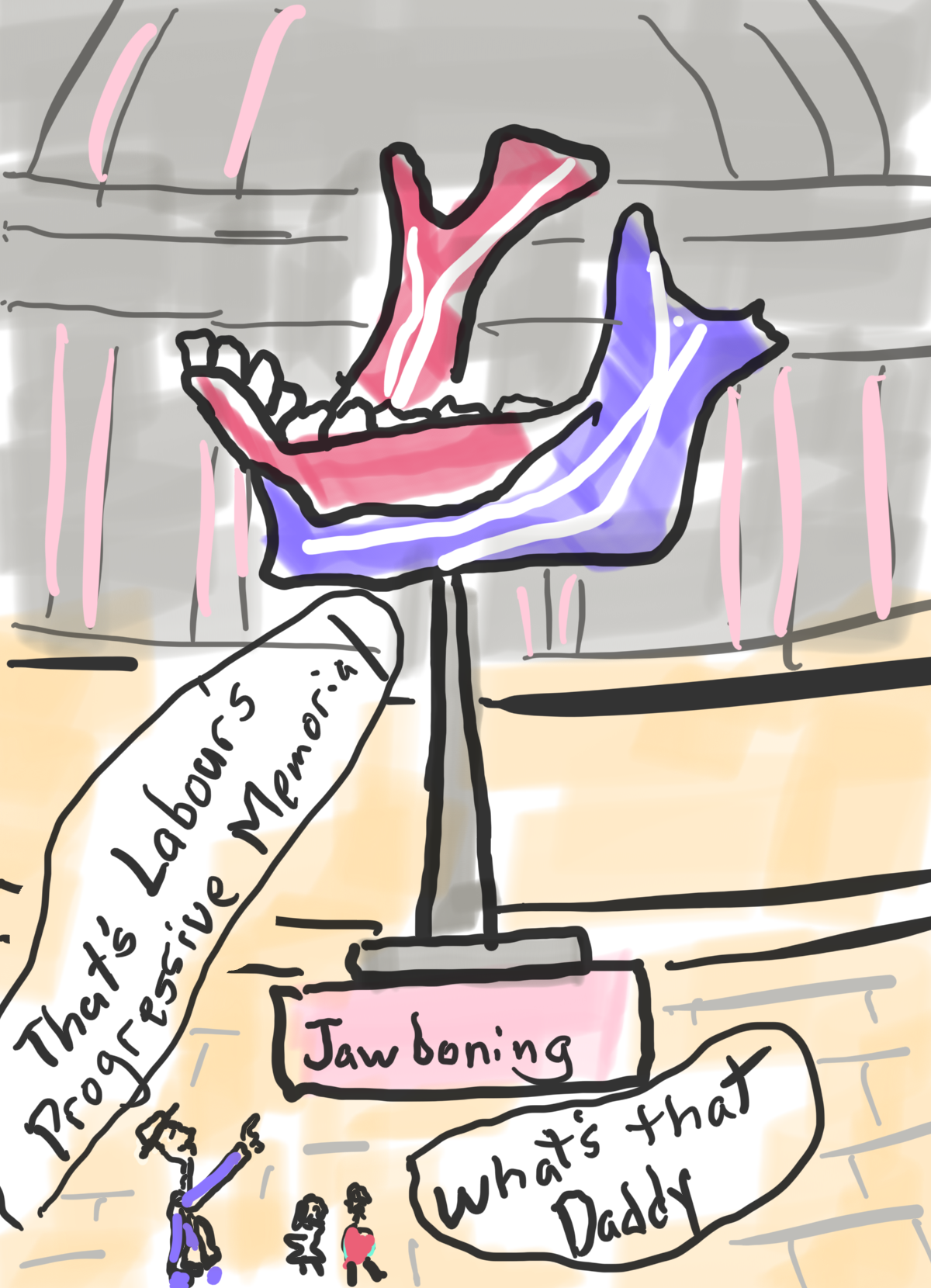
Liz Truss in Danger on Threadneedle Street
Analysis | Constitutional & Financial Affairs
Liz Truss claims she was sabotaged. The Bank says markets acted. The evidence lies somewhere in between — and the implications for British democracy are profound.
On 23 September 2022, Chancellor Kwasi Kwarteng rose in the House of Commons to deliver what the Truss government called a “growth plan” — sweeping unfunded tax cuts intended to shock the British economy into expansion. Within days, the pound had crashed to a record low against the dollar, gilt yields had spiked to crisis levels, pension funds were facing collapse, and the Bank of England had been forced into emergency intervention. Forty-five days after taking office, Liz Truss resigned. It was the shortest premiership in British history.
The conventional account blames the mini-Budget itself — reckless borrowing, no OBR forecast, markets spooked. But Truss has spent the years since building a different case: that the Bank of England did not merely react to events, but actively shaped them — and that key institutions of the British state, including the Treasury and the civil service, worked to undermine her government from within.
Speaking on TalkTV and in subsequent interviews, and writing in a July 2025 Telegraph article, she laid out her allegations in striking terms. This analysis examines the institutional mechanics of how such an undermining could have occurred, who inside her government would have known, and what structural changes would be needed to prevent a repeat.
The Sequence of Events: What Truss Alleges
Truss’s core allegation is not simply that the Bank reacted badly to her policies. It is that the Bank acted in a way that made a market crisis more likely, and then allowed the blame to fall entirely on her government.
“The Bank of England announced the sale of £40 billion of gilts the day before the mini-Budget and didn’t increase interest rates by as much as expected, thereby worrying the markets.” — Liz Truss, The Telegraph, July 2025
This timing is the crux of the matter. The Bank had been engaged in a programme of Quantitative Easing — buying gilts to inject liquidity into the economy — since the 2008 financial crisis. In 2022, with inflation rising sharply, the Bank announced it would begin Quantitative Tightening: selling those gilts back into the market. The decision to announce a £40 billion gilt sale on the eve of the mini-Budget was, at minimum, extraordinarily poor timing. At most, in Truss’s reading, it was a deliberate signal to markets that the Bank was moving in the opposite direction to the government — a message that no coordinated economic plan existed.
The second part of her allegation concerns Liability-Driven Investments, or LDIs — a leveraged strategy used by pension funds that assumed interest rates would stay low. Truss argues she was never warned this “unexploded bomb” existed in the pensions system, and that when the mini-Budget caused yields to spike, the LDI funds began mass-selling gilts to cover margin calls, creating a vicious feedback loop. The Bank then intervened to stop the spiral — and, she claims, used its intervention to cement the narrative that her budget was solely to blame.
What the Bank’s Own Research Later Admitted
- A May 2024 Bank of England report found that LDI fund selling accounted for at least half of the fall in gilt prices during the crisis.
- Researchers from the Bank of England, the Bank for International Settlements, and Harvard Business School co-authored the finding.
- A separate academic analysis found the mini-Budget itself likely accounted for less than one quarter of the observed rise in gilt yields.
- The LDI funds were regulated — or were supposed to be — by the Bank’s own Prudential Regulation Authority.
How the Undermining Could Have Worked: An Institutional Analysis
To understand how the Bank of England could exert such leverage over an elected government, it is necessary to understand the structural position it occupies. The Bank is an operationally independent public body. The government sets its inflation target; the Bank decides how to pursue it. Crucially, the Bank controls the timing of its own market operations, its public communications, and its regulatory decisions about financial products like LDIs.
This independence is not incidental. It was designed to remove monetary policy from short-term political pressure. But it creates an asymmetry: the Bank can act on a schedule entirely its own, without consulting the government, in ways that directly affect the government’s fiscal environment. The decision to announce £40 billion in gilt sales the day before the budget was a unilateral Bank decision. There was no legal requirement to coordinate with Downing Street.
The LDI issue represents a second vector. The Bank’s Prudential Regulation Authority had oversight of pension fund investment strategies. If it had known — and there is evidence regulators had flagged LDI risks internally — that the pension system contained a large leveraged position that would unwind catastrophically in a rising-rate environment, it had both the knowledge and the regulatory authority to act. It did not do so before the crisis. The Bank’s own subsequent research effectively confirmed this was a regulatory failure. Yet in the immediate aftermath of the crisis, the public and media framing placed the entire responsibility on the Truss mini-Budget.
“Unbeknown to me, they had allowed an unexploded bomb to develop in the pensions market… When they had to intervene to fix their own problem, they piled the blame on me.” — Liz Truss
A third vector is the relationship between the Bank and financial markets. When the Governor of the Bank of England speaks publicly about fiscal policy — even obliquely — markets listen. Andrew Bailey’s communications during and after the crisis, including a public ultimatum to pension funds to resolve their positions within days, amplified market panic at precisely the moment the government needed calm. Whether this reflects poor crisis management or deliberate framing is a question that has never been independently adjudicated.
Who Inside the Truss Government Would Have Known?
This is where the picture becomes both clearer and more troubling. British government is not a unified entity. At the apex of the Truss administration were the Prime Minister and Chancellor — elected politicians committed to the growth agenda. But surrounding them at every level were permanent civil servants, advisers, and regulators who owed no political loyalty to Truss and who had, in many cases, served under multiple governments with very different economic philosophies.
The permanent secretary to the Treasury — a career civil servant — would have had full visibility of the pre-budget economic environment, including communications with the Bank of England and the OBR. The OBR itself, whose forecast was pointedly not commissioned for the mini-Budget, had access to all the underlying fiscal data and would have understood the LDI vulnerability better than almost anyone. Treasury officials routinely liaise with the Bank’s Monetary Policy Committee and Financial Policy Committee; the existence of a large leveraged position in pension funds was not a secret within those circles.
Truss has separately alleged that Treasury officials and the OBR briefed against her government to the media, including a leaked claim of a “£70 billion black hole” in her plans — a figure she says was later shown to be wrong. If accurate, this represents a serious breach of civil service impartiality. What it suggests is a government operating in a two-tier structure: elected ministers at the top, pursuing one agenda; a dense layer of institutional actors below them, with their own assessments, their own networks, and in some cases their own view of what sound policy looked like.
Key Actors and Their Likely Awareness
- Bank of England Governor Andrew Bailey — full knowledge of QT timing, market fragility, and LDI regulatory status.
- Treasury Permanent Secretary — aware of fiscal projections, Bank communications, and OBR assessments.
- Office for Budget Responsibility (OBR) — held detailed fiscal modelling; not invited to produce a forecast for the mini-Budget.
- Financial Policy Committee (Bank of England) — responsible for macroprudential oversight, including LDI risk.
- Kwasi Kwarteng (Chancellor) — appears genuinely unaware of LDI risk exposure; disputed Treasury advice on gilt timing.
- Liz Truss (PM) — claims to have been blindsided on LDI; aware of tension with the Bank but not its full extent.
Is This a Conspiracy — or a Structural Problem?
It would be too simple — and probably wrong — to characterise what happened as a coordinated plot. Central banks do not hold meetings to decide which prime ministers to remove. What the evidence suggests is something subtler and arguably more serious: a set of institutional actors, each operating within their own mandates, whose collective actions had the effect of making a radical economic programme impossible to sustain — regardless of whether that programme had economic merit.
The Bank announced gilt sales on its own schedule. The OBR’s warnings circulated within Whitehall. The Treasury’s permanent machinery continued operating according to its own institutional orthodoxy. The pension regulator had not acted on LDI risk. None of these individually constitutes sabotage. Collectively, they created a set of conditions in which the mini-Budget — launched without an OBR forecast, into a market already spooked by a £40 billion gilt sale announcement — had almost no chance of being received calmly.
The question Truss raises, and which her critics largely refuse to engage with seriously, is this: would the same institutional machinery have operated in the same way for a government proposing large increases in borrowing for public spending? The gilt yields in January 2025, following Rachel Reeves’s budget, exceeded those of the mini-Budget peak — yet, as Truss pointedly notes, the Bank, the IMF, and much of the media coverage was considerably more muted.
How a Future Prime Minister Could Protect Themselves
Assuming a future government wished to pursue economic policies that diverged significantly from institutional orthodoxy — whether of the left or the right — what structural changes would give it a fighting chance?
1. Mandatory pre-budget coordination window. Require the Bank of England to give the Treasury formal advance notice of any major market operations — QT announcements, rate decisions, significant regulatory actions — within a defined window before a budget. Not veto power; transparency. A government should not be blindsided by a £40 billion market announcement the day before it presents its economic plan.
2. Reform the OBR’s role. Either make OBR forecasts genuinely mandatory for all fiscal events, removing the political temptation to bypass them — or strip the OBR of any role in market-facing communications to prevent it becoming a tool of market signalling against the government of the day. The current arrangement allows the OBR to be weaponised by those who wish to undermine a budget while also allowing governments to sidestep it entirely. Neither outcome serves the public.
3. Parliamentary oversight of Bank market operations. Give the Treasury Select Committee binding authority — not just scrutiny — to review major Bank market operations post-hoc within 30 days, with a public report. The Bank should be required to account for the timing of decisions, not just their economic rationale. A committee that can only write letters after the damage is done offers little meaningful accountability.
4. Independent audit of regulatory failures. When a financial crisis occurs involving regulated products, require an immediate independent review — not one conducted by the Bank itself — of whether a prior regulatory failure contributed to the crisis and whether it was known in advance by regulators. The fact that the Bank investigated its own LDI oversight failure and published its findings two years after the crisis is inadequate.
5. Civil service reform and impartiality enforcement. Strengthen the Ministerial Code to make media briefing by civil servants against government policy a disciplinary matter, with an independent investigator who is not appointed from within the permanent secretary community. The current system relies almost entirely on self-policing.
6. A Prime Minister’s independent economic unit. Create a small, genuinely independent economic advisory unit inside No. 10 — separate from the Treasury — that reports directly to the Prime Minister and can provide an independent second opinion on fiscal risk, market conditions, and the advice flowing up from the permanent civil service. No prime minister should be entirely dependent on the Treasury for their understanding of how their own budget will land.
The Deeper Constitutional Question
Behind all of the specific mechanics lies a question the British constitution has never had to answer cleanly: what happens when the operational independence granted to an unelected institution is used — intentionally or not — to constrain the policy choices of an elected government beyond what Parliament intended?
The Bank of England Act 1998 gave the Bank independence over how to hit an inflation target set by the Chancellor. It did not give the Bank a veto over fiscal policy. But a central bank that controls the timing of its market operations, regulates the financial products that determine how markets absorb government debt, and communicates publicly with markets during fiscal events, has an enormous amount of de facto power over a government’s room for manoeuvre — regardless of what the statute says.
The Truss episode, whatever its ultimate cause, exposed this gap with unusual clarity. A government arrived in office with a mandate for economic change. Within weeks, the institutional architecture of independent bodies — the Bank, the OBR, the Treasury machinery — had either failed to prepare the ground for that change, actively moved against it, or stood aside while markets did the work of reversing it. Elected or not, that architecture effectively decided the outcome.
Analytical conclusion:
The evidence does not support a deliberate conspiracy to remove Truss from office. It does support the conclusion that the Bank of England’s pre-budget gilt sale announcement was a serious failure of coordination at minimum; that the LDI crisis was in material part a Bank regulatory failure that was then narrated as a government policy failure; and that the institutional machinery surrounding the Truss government was either unable or unwilling to provide the warnings that might have allowed the mini-Budget to be better designed or better timed. Whether that constitutes sabotage depends on your definition. It unquestionably constitutes a structural problem that no future reforming government — of any political stripe — should leave unaddressed.