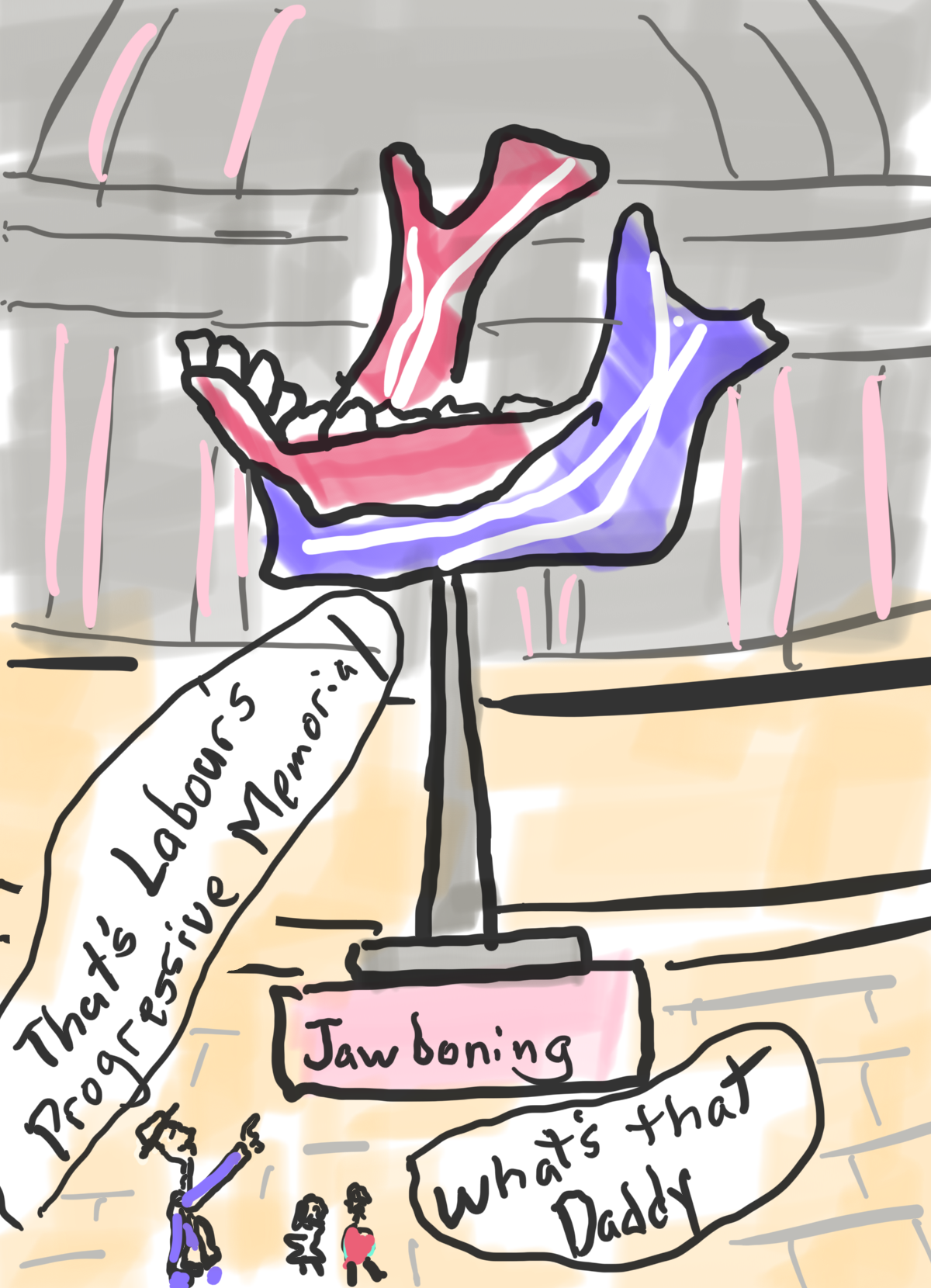
“Thirty million sick days. Three billion pounds on agency cover. A workforce more anxious, more burnt out, and more absent than at any point in recorded history. Is this really what Britain is proud of?”
Let that sink in for a moment.
The National Health Service — that crown jewel of British public life, that sacred institution draped in bunting every NHS anniversary, celebrated in the opening ceremony of the London Olympics, defended with religious fervour by politicians of every stripe — is, by any objective measure, profoundly, systemically, and expensively sick.
Not the patients. The staff.
And the cost to British taxpayers, to the British economy, and to the British psyche is nothing short of catastrophic.
The Number That Should Stop Britain Cold
In 2022 — a single calendar year — NHS staff in England took 27 million sick days. By some estimates, when the most recent figures are applied across the full UK, the number nudges toward 29 million. That is not a typo. That is not a rounding error. That is the equivalent of 74,500 full-time members of staff — including 20,400 nurses and 2,900 doctors — doing absolutely nothing for an entire year.
To put it another way: the NHS lost more working days to staff sickness in a single year than the entire population of a mid-sized British city goes to work in the same period.
And the sickness absence rate? It sits at a stubborn 5.1% as of 2024/25 — more than double the rate seen across the broader UK economy (2.0%). NHS staff are absent at a rate that is two and a half times higher than the average British worker. In some trusts and some roles — ambulance services, for instance — the rate hits a staggering 7%. Three ambulance trusts saw one in ten staff absent on any given day throughout 2022.
This is not a workforce that is occasionally under the weather. This is a workforce in chronic, institutional, systemic collapse.
The Bill the British Public Is Quietly Paying
The financial haemorrhage is happening across multiple arteries simultaneously, and most taxpayers have no idea.
Layer One — Paying Staff Not to Work: Direct occupational sick pay costs the NHS an estimated £2.4 billion per year. Every sick day taken by a directly employed NHS worker is a paid day — sometimes at full salary, sometimes at half. A long-serving employee with over five years’ service is entitled to up to six months at full pay and a further six months at half pay before any formal action need even be considered. That is twelve months of paid absence before a single disciplinary conversation is mandatory.
Layer Two — Paying Someone Else to Do the Absent Worker’s Job: Here is where it gets truly obscene. When an NHS employee calls in sick, the bed still needs to be made, the patient still needs to be medicated, the ambulance still needs a crew. So the NHS calls an agency. And the agency charges whatever the market — or more precisely, whatever desperation — will bear. NHS trusts have been charged up to £2,000 for a single nursing shift. The total agency and locum bill hit £3 billion in 2023-24 alone. The combined bank and agency bill across the NHS has exceeded £5.2 billion in a single year.
Read that again: £5.2 billion. In one year. On temporary cover.
That is enough to build several new hospitals. That is more than the entire annual GDP of some small nations. That is the price Britain pays for a workforce that cannot or will not show up.
Layer Three — The Wider Economic Wreckage: Zoom out from the NHS itself and the damage to the broader economy is almost incomprehensible. Lost output due to sickness absence across the UK labour market is estimated to cost between £38 billion and £56 billion annually. When economic inactivity from long-term ill health is factored in, the total burden on the British economy climbs as high as £330 billion a year. The NHS, as both the nation’s largest employer and the institution responsible for keeping the rest of the workforce healthy, sits at the epicentre of this catastrophe — simultaneously a victim and, some would argue, a cause.
What Is Making Them Sick? The Answer Is Damning
The single biggest cause of sickness absence in the NHS is not a physical ailment. It is not a virus, not a broken bone, not a chronic disease. It is the mind.
Anxiety, stress, depression, and other psychiatric illnesses account for over 27% of all NHS sick days — a proportion nearly double that seen in the rest of the UK economy, where mental health accounts for just 13.8% of absences. In raw numbers, over six million working days were lost to mental health reasons in 2022 alone, with the number of days lost to anxiety, stress and depression up 26% compared to pre-pandemic levels.
The NHS Staff Survey — the annual reality check that management would rather keep quiet — paints a portrait of institutional despair:
- 42% of NHS staff felt unwell in the past year due to work-related stress
- 30% often feel burnt out because of their work
- 27.4% frequently feel exhausted at the very thought of another shift
- 44% are dissatisfied with staffing levels in their organisation
- 29% are actively thinking about leaving the NHS altogether
- 57% of staff admitted to going into work despite feeling unwell — “presenteeism” that masks the true scale of the dysfunction
This is not a workforce with a headache. This is a workforce that has been ground into the dust — and is now voting with its sick note. Too Funny! The Mental Health Mythological Goose has been fully cooked! Come join the feast!
The Self-Defeating Death Spiral
What makes this crisis so particularly devastating — and so resistant to easy solutions — is the vicious feedback loop at its core.
Staff get sick and go absent. Their colleagues are left short-handed and must absorb the extra workload. That additional burden increases stress, accelerates burnout, and drives up sickness absence among those who stayed. The gaps left by the newly absent are filled with expensive agency workers, who lack the institutional knowledge and team cohesion of permanent staff, creating additional friction and pressure. The permanent staff who remain feel undervalued, demoralised, and exhausted. More of them call in sick — or leave entirely.
Rinse. Repeat. At a cost of billions.
The Institute for Government calculated that if NHS sickness rates had simply remained at their pre-pandemic 2019 levels — which were themselves already above the national average — staff would have worked an additional 4.1 million days in 2024/25. That is the equivalent of 18,200 extra full-time staff members — a workforce the size of a small army — working for free, simply by showing up at the rate they used to.
The “Sickness Entitlement” Nobody Talks About
Here is a fact that rarely makes it into polite conversation about NHS reform: the NHS has one of the most generous sick pay schemes of any employer on earth. Under the Agenda for Change terms and conditions that govern the majority of NHS staff, sick pay is not a fixed annual allowance — it is a rolling entitlement calculated over a 12-month lookback period, and it scales with length of service:
- Under 1 year of service: 1 month full pay + 2 months half pay
- 1–2 years: 2 months full pay + 2 months half pay
- 2–3 years: 4 months full pay + 4 months half pay
- 3–5 years: 5 months full pay + 5 months half pay
- Over 5 years: 6 months full pay + 6 months half pay
That final category — which covers a substantial portion of the NHS’s 1.5 million-strong workforce — represents up to twelve months of paid absence before any dismissal process need even commence. And once the rolling 12-month window has passed, the entitlement slowly rebuilds. There is no lifetime cap. There is no “you’ve used your allocation.” It reloads.
For absences under seven days, no doctor’s note is required. Staff self-certify — that is, they tell their manager they’re ill, and that is sufficient. Only from day eight is a formal “fit note” from a GP needed. Return-to-work interviews are mandated upon every return — one of the few genuine deterrents — but with 1.5 million employees spread across hundreds of trusts, enforcement is, at best, inconsistent.
No private sector employer in Britain operates anything close to this framework. The generosity was designed to protect workers in one of the most demanding professions on earth — and that intention was noble. But the outcome, compounded by decades of underfunding, staff shortages, and a post-pandemic mental health crisis, is a system that has become financially and operationally unsustainable.
The Ambulance at the Bottom of the Cliff
There is a certain grim irony in the fact that ambulance services have the worst sickness absence rates of any NHS staff group — touching 7.08% in 2024/25, and hitting 10% in three trusts in 2022. The people tasked with responding to Britain’s medical emergencies are themselves, statistically, the most likely to be absent due to ill health on any given day.
The North West of England consistently reports the highest regional absence rate — hitting 6.5% as recently as October 2025. London, despite its reputation for overwork, manages the lowest at around 4-5%. The variation tells its own story about management culture, local leadership, and the entirely uneven experience of working within what is nominally a single national health service.
What Is Actually Being Done?
The honest answer is: not enough, not fast enough, and not coherently enough.
The current Labour government has identified reducing sickness absence as a key productivity lever — NHS England’s chief financial officer stated explicitly in February 2025 board papers that tackling absence is central to the productivity agenda. A crackdown on agency spending has already clawed back almost £1 billion in 2024-25. There is talk of a ten-year plan, of occupational health investment, of mental health support for frontline workers.
But the structural problem remains: the NHS is the largest employer in Europe, with 1.5 million staff, hundreds of individual trusts each operating with significant autonomy, a unionised workforce with deeply embedded contractual protections, and a political class that treats any suggestion of reforming sick pay terms as electoral suicide.
Meanwhile, the sickness rate in October 2025 ticked back up to 5.7% — higher than October 2024. The trend line is not pointing in the right direction.
The Real Diagnosis
Britain has built, over decades, a healthcare institution that cannot heal itself. It has created a workforce culture in which absence has become not just accepted but structurally embedded — incentivised by generous entitlements, enabled by under-management, and turbo-charged by a post-pandemic mental health crisis that nobody in government has yet found the political courage to address with the funding it demands.
The NHS is not failing because its staff are lazy or dishonest. The NHS is failing because it has been chronically underfunded, chronically understaffed, and chronically mismanaged for so long that its workforce has reached a point of collective exhaustion — and the system itself has no immune response left.
Twenty-nine million sick days. £2.4 billion in sick pay. £3 billion in agency cover. £56 billion in lost national productivity. A sickness rate two and a half times the national average. Mental health crises that account for more than a quarter of every day lost.
The National Health Service is, by every measurable metric, one of the sickest organisations in Britain.
And until Britain is willing to say that out loud — without flinching, without the usual defensive nationalism, without retreating behind the comforting myth of a cherished institution that can do no wrong — it will keep paying the bill. In billions. Every single year.